For my birthday, I would love to get a phone call from you in the next month!
It would be super-mega-awesome if you had a dad joke for me on the call!
The coldest winter I ever spent
Archive for the ‘General’ Category.
It would be super-mega-awesome if you had a dad joke for me on the call!
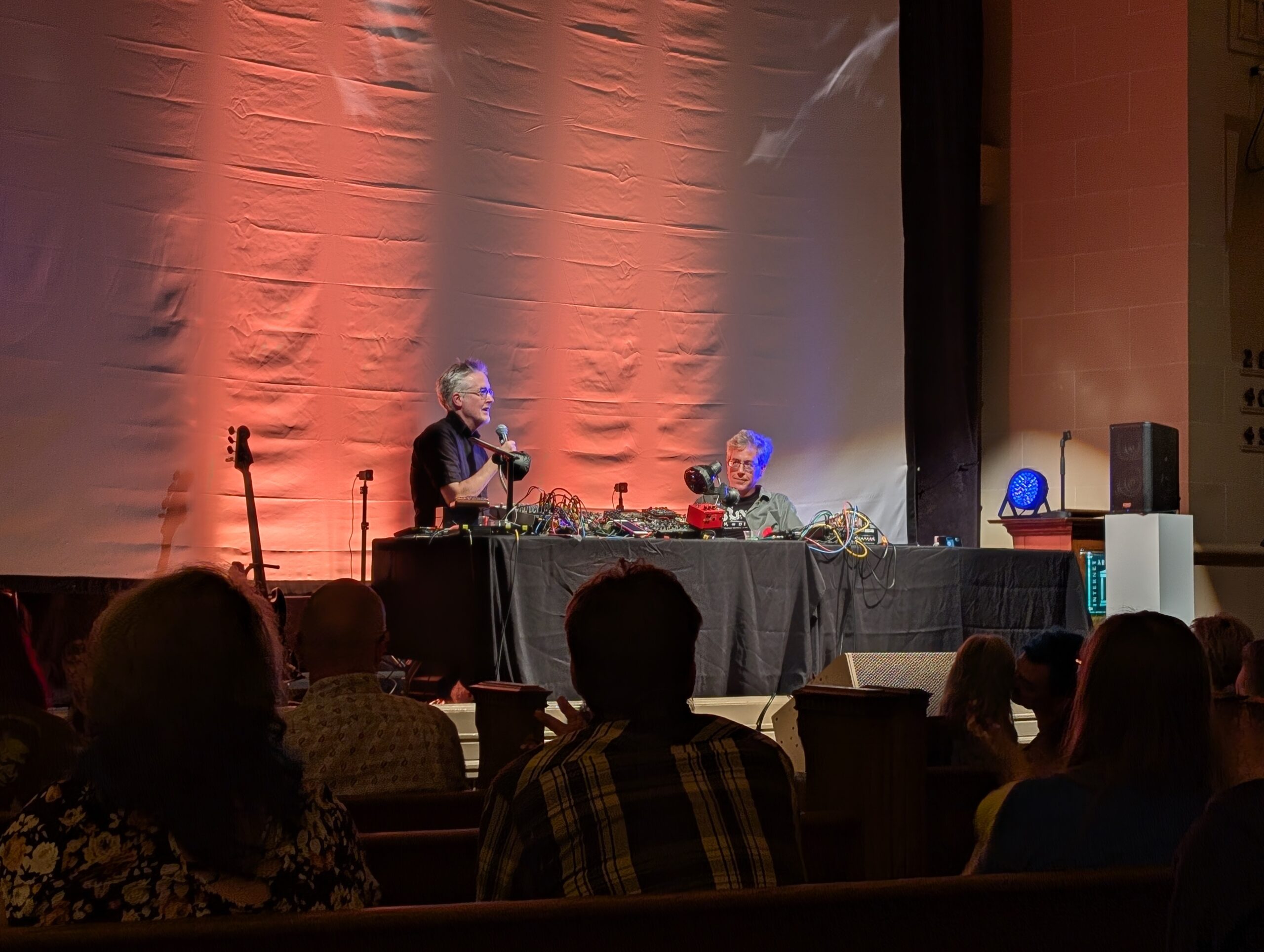
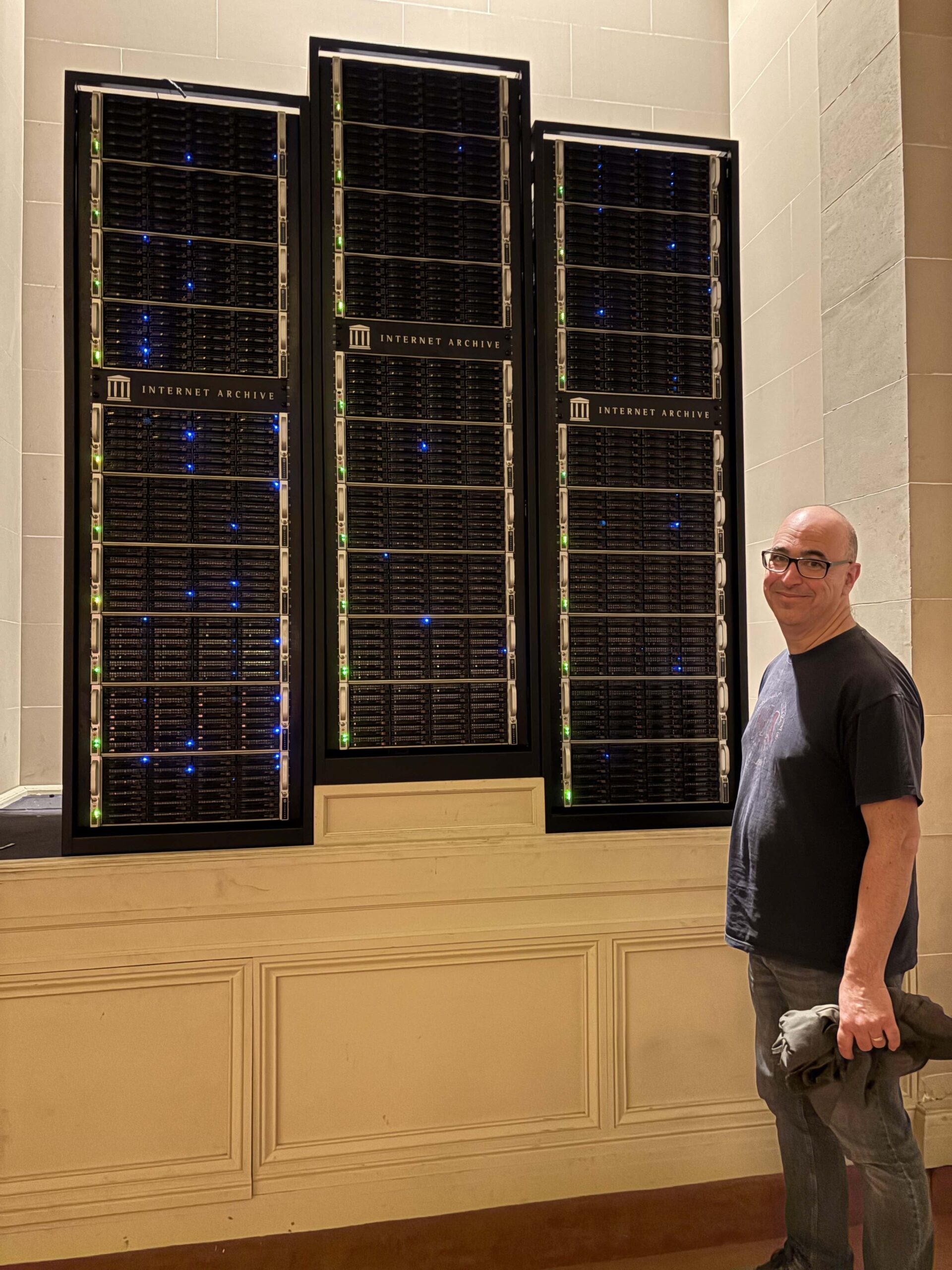
Last night I got to see one of my favorite bands, Negativland, play at a location that, until last night, only lived in my fabled imagination, The Internet Archive! It was a great show, with some excellent moments (before and during the show!), with good people!
About 6 weeks ago, I woke up from a nap with no hearing in my left ear and a lot of dizzyiness. So going out to a music show seems… inappropriate. My hearing hasn’t returned, and I’m still a bit dizzy but my friend Ken Duffy wanted to go with me and offered to drive! And it’s time to get back to living.
When we got there, there certainly were a lot of white-haired and no-haired men, all around my age and Ken’s age, which was startling at first, but makes sense.
We got inside and Ken graciously introduced me to several people in the lobby. One in particular, I hadn’t caught his name because deafness, but as we’re chatting I listened to his voice and got a thrill as I realized we were hanging with Mark Hosler. After a few minutes, he excused himself, saying he had to get ready for the performance. Hurray and squee!
I got a ponder the universe while their dulcid tones played. It was a really good show!
The performance space at The Internet Archive is this beautiful and noble mix of classic Library at Alexandria (the ceiling is so “classical”) and towers of servers in the back!
I really enjoyed the whole show, and it was a special thrill to hear them play Christianity is Stupid!
Chisanbop – A Korean Finger Counting Method
I remember when I was about 8 years old I saw a TV show showing a finger counting method that captured my attention. I only saw the show once and didn’t remember all the details but it just seemed so useful to be able to use my fingers to count to numbers higher than 10!
Heck, I remember the room I was in when watching the video better than the video itself.
What I gleaned from the program is to use my left hand fingers as 1’s, my left thumb as 5, my right hand fingers as 10’s and my right thumb as 50. That’s all. That simple technique lets me count to 9 on one hand and 99 on both hands. Turns out, I had the hands backwards from the official Chisanbop method, but that works better for me since I write with my right hand, leaving my left hand to do math. To be honest, the utility really is in being able to count to nine on just my left hand. Anything too much more and I reach for the calculator on my phone.
But back to that video I saw. It was a huge thrill for me to find the full story of that video I saw way back when! For decades I wondered why no one else had heard of this, and why no one I knew used alternate counting methods! It actually got me a little mad at times, where they thought I was the weird one for using an obviously better (if only slightly) way to count.
I actually got a distinct thrill when I found out that Germans count differently than Americans, ala Inglourious Basterds!

Inglourious Basterds counting
Ok, the title sounds sad, but actually this is really good news!
You know how women that are pregnant or trying to get pregnant should make sure to get enough folate and vitamin B12. Well, here is a kicker, it’s important for the men to get those vitamins too! (I mean, after the woman is pregnant, it doesn’t matter, but it does matter before!!)
Read the article about the study: Low B12, Folate in Fathers Linked to Birth Defects
This reminds me how the studies in the 1980s on heart attacks was initially only done with men (and by men) but then, remarkably (or not!), it turns out that women have heart attacks too. But this vitamin one feels a bit more subtle. It’s rather a great piece of sleuthing and helps make the world a better place!
I’ve gotten a tiny bit of hearing back in my left ear! It’s not useful but it’s a start! I gave myself an audio test and I can hear a little at 250 hz and at 4,000hz and above. It makes loud voices (like BART train announcements) sound a little like adults from Charlie Brown. I was getting oral and intratympanic prednosone but that’s finished. I’ve been going to Walnut Creek every day for hyperbaric oxygen therapy… I sit in a tube filled with pure oxygen, watching cable TV for 90 minutes; it’s supposed to help. That’ll be done in a week. And then we wait and hope. . . . The loss of hearing is a bother but my persistent vertigo means I STILL can’t drive or work. It’s improving but progress is very slow. Maybe I can drive in another 2 weeks??
Being on a few Facebook groups for SSNHL has been sobering. Recovery is absolutely, completely, not guaranteed. Few people talk about the vertigo lasting more than 6 months (6 months?!?!?!?) but the hearing is something like 30% recover mostly, 30% recover partially, 30% have no hearing recovery.
I’m taking a whole vitamin/supplement regimen that is guaranteed to…. who the hell knows.
Sudden deafness update:
Last Sunday I woke up from a nap having completely lost hearing in my left ear, followed up with severe vertigo the next day. I’ve been doing “Epley Maneuvers”, tilting my head to make the positional vertigo go away and I think that’s 90% finished. I still have persistent vertigo, a 2-3 out of 10, which means I can walk but not drive. And I still can’t hear.
Oral and intratympanic (an injection in my ear) prednisone are the best bets, and I’ve been getting those. Next best bet is getting hyperbaric oxygen therapy. I got 2 120 minute treatments over the weekend at a great place, Holistic Hyperbarics in Emeryville. Monday I’ll switch to the one my insurance approved, Hyperbaric Medicine & Wound Care in Walnut Creek. I really like the first place so I’ll try to get my outside referral changed.
Each treatment take something like 3 hours, plus some travel time so this is no good for me working. It’s supposed to help within 10-20 days. The window of opportunity for repairing my ear damage is rapidly closing…. something like at the 10-30 day mark. So I just have to keep at it!
I was hoping the hyperbaric oxygen therapy would unlock some superpowers but none have revealed themselves yet, except for the awakening nature of making the time to read a book for the first time in a while. I’m reading Big Magic by Elizabeth Gilbert, all about creativity, inspiration, and art.
So, my work is on hold ’til my balance comes back (any day now?) and my hearing is on hold until it comes back in 10-? days.
Megan continue to be awesome. Abigail continues to be awesome. Messages of support continue to be awesome. Kaiser Permanente medical and hyperbaric oxygen and lots of googling is going well. (I had to suggest to my doctor that we try the hyperbaric, but he followed through with it!)
Ugh.
I got the sniffles last week and over the weekend I suddenly went deaf in my left ear and got severe vertigo. I’ve gotten medical treatment for the deafness, a prednisone injection in my ear, oral prednisone and sinus clearing meds to decrease inflammation in my inner ear. I got PT for the vertigo and it’s helping, mostly the epley maneuver to relocate calcium crystals that became dislodged in my inner ear. But I’m still dizzy and can’t drive. Recovery time for the dizziness is “days to several weeks, probably”.
Did I mention, “Ugh”?
Megan and Abigail have been amazing through this!
Expedia asked me what I thought of their service. Here’s what I had to say:
A few months ago, I was scammed by Routes car rental at FLL airport. It wasn’t a disagreement, it was a scam they very intentionally perpetrated on myself and every other person in the car rental center there at 6:00 in the morning. I have an audio recording of the entire terrible experience. After working with Expedia for a few weeks (several emails and 3 long telephone calls) I finally got the scam charges removed from my account by Expedia. I am thankful that Expedia did that for me! It is sinful that Routes car rental is still allowed on the Expedia platform. Here are details about my experience: https://www.lee.org/blog/2026/03/12/routes-car-rental-scam-at-fort-lauderdale-airport-fll/
Routes car rental’s predatory practices tarnishes the reputation of Expedia and costs you money in refunds, unhappy customers, and customer service calls. Please strongly consider dropping them as a service provider.
The Routes agent told me that she handled all of the calls for Routes Car Rental, NextCar, Mex, and Advantage Car Rental. I assume these companies are as shady as Routes.